


Robotic Laser Welding of Sheet Metal
Not sure which model fits?
Send the part weight, the reach you need and the cycle. We will name the model — and say plainly if a robot is not the right answer for it.
Laser welding changed the economics of visible seams on thin stainless. The heat-affected zone is narrow, distortion is a fraction of what MIG produces, and on many joints the weld needs no dressing at all — which removes the grinding and polishing operation that used to cost more than the welding.
The trade is fit-up. A laser spot is small, and a gap that MIG would happily bridge will simply be cut through. Laser welding rewards good press tooling and consistent fixturing, and punishes parts that arrive with variable gaps.
What gets welded
Stainless steel enclosures and cabinets, commercial kitchen equipment, sinks and worktops, thin-wall tubing and handrails, lift and escalator panels, battery modules and enclosure assemblies, white goods components, and decorative architectural metalwork.
Choosing the robot
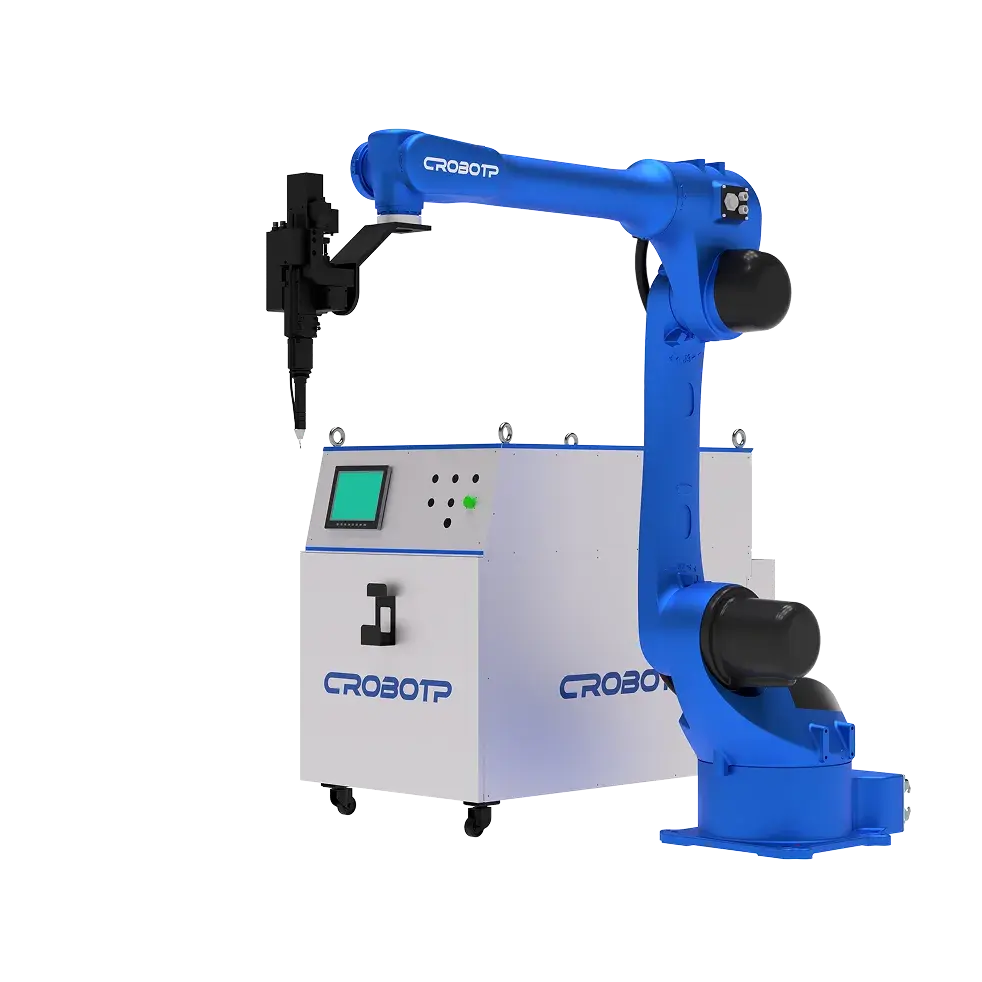
Payload covers the laser head, the process fibre and any seam-tracking sensor — not the workpiece. Five to ten kilograms is enough for most heads; 20 kg covers heavier wobble heads and integrated tracking.
The range splits in two, and the split matters more than the model numbers.
Industrial arms for fenced cells and series production:
Collaborative versions for short runs and frequent changeovers. Any robot in the RC series can be hand-guided — the operator leads the head along the seam and the robot records the path, instead of writing coordinates; the -J suffix marks the laser version:
The collaborative route is the one that suits fabricators moving from handheld laser welding: the same process, the same operator, without the fatigue and with a repeatable path. It does not remove the need for a laser safety enclosure.
Laser safety is not negotiable
A fibre laser is a Class 4 source. The cell requires a rated enclosure, interlocks, viewing windows to the correct optical density and trained operators — a collaborative robot does not change this, because the hazard is the beam, not the arm. Budget for the enclosure at the same time as the robot; it is a substantial line item and retrofitting it is worse.
What else the cell needs
Fibre laser source and chiller, welding head with the correct focal length, wobble optics where gaps must be bridged, shielding gas, fixturing rigid enough to hold fit-up under thermal load, fume extraction rated for metal fume, and seam tracking on anything with variable geometry.
Get a quotation
Send the part with material, thickness, joint type and weld lengths, and tell us what fit-up your tooling holds. That last figure decides whether laser is the right process at all — and we will say so if it is not.


